TECHNOLOGY
Production Technology for Our Stories
Creating and revising the scenes you want requires handling both the content of the video and the context of the project.
Building on Tacu's production environment, Cutib develops AI that understands video and carries out creators' requests.
TACU
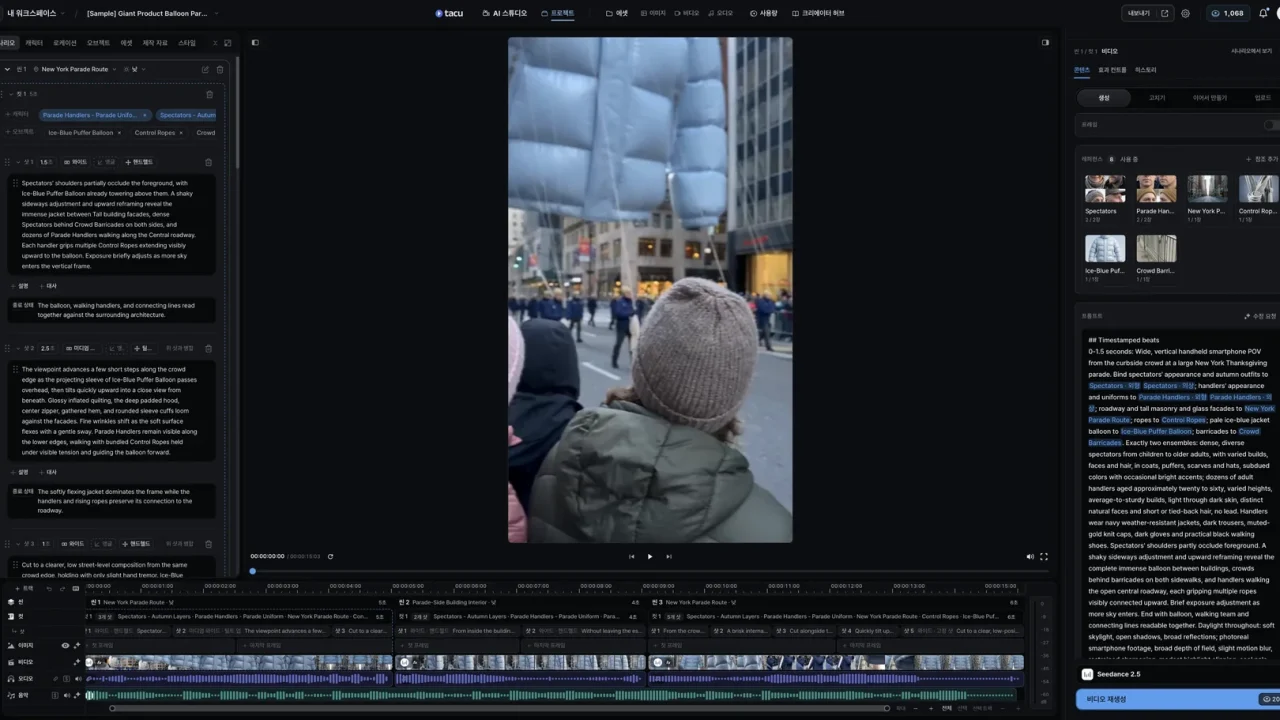
Project-based Video Production
Even when remaking a single cut, you must handle character and location references, the surrounding cuts and the edit state together. Tacu connects the script, production assets, generation history and timeline in one project.
Creators can regenerate only the selected cuts and compare results while continuing the existing edit.
-
A Structure That Connects Production Data [ 01 ]
Split the script into scenes and cuts and manage references for characters, costumes, locations and props together. See within the project which elements and generated results are linked to each scene.
-
Revising by Comparing Results [ 02 ]
Compare multiple generated results for the same cut and choose the take for the edit. Regenerate selected cuts while keeping the other cuts and the existing edit.
-
Editing That Flows into Post-production [ 03 ]
Adjust cut order and length, sound and subtitles on the timeline. Export the finished video, or export edit packages for Premiere Pro and Final Cut Pro to continue post-production.
RESEARCH
AI That Understands Creative Intent and Video Context
Cutib's video AI focuses on understanding scenes and turning creators' intent into concrete tasks.
We develop technology that analyzes the relationship between picture and sound, and technology that runs production tools according to the project's context.
TACU AGENT
An AI Agent That Turns Creative Intent into Action
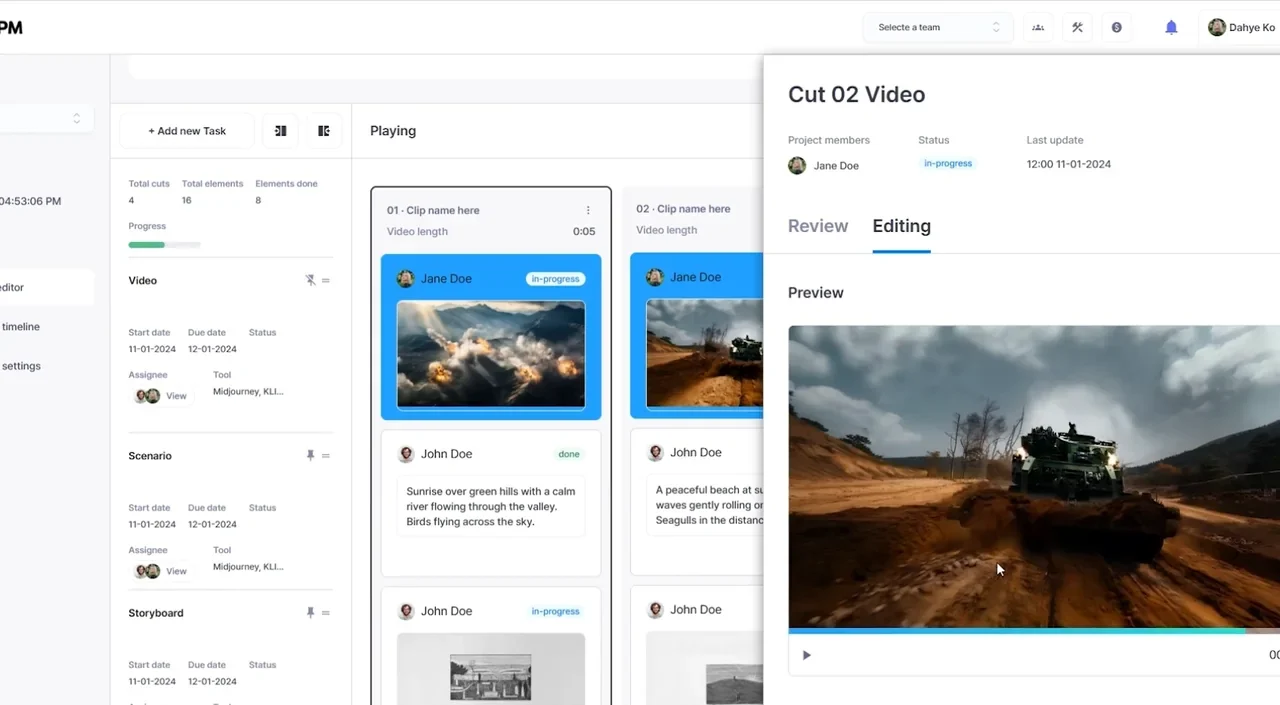
Tacu Agent connects creators' requests to tasks that fit the project's context.
We are developing a structure that interprets the scene, reference assets and current edit state a request points to, and links the right tools with applying their results.
-
Project Context [ 01 ]
We handle the cuts and production elements a request refers to, along with the selected results and the edit state. The starting point is identifying the target precisely and carrying earlier production decisions into the next run.
-
Choosing and Running Tools [ 02 ]
We distinguish the inputs, outputs and execution order of image, video and audio generation and editing tools, and break natural-language requests into concrete tasks each tool can perform.
-
Execution Logs and Recovery [ 03 ]
We link results, costs and execution logs to each task. Resuming interrupted jobs, handling failures, and undo/redo are key development challenges.
OTACU
Multimodal Video Understanding
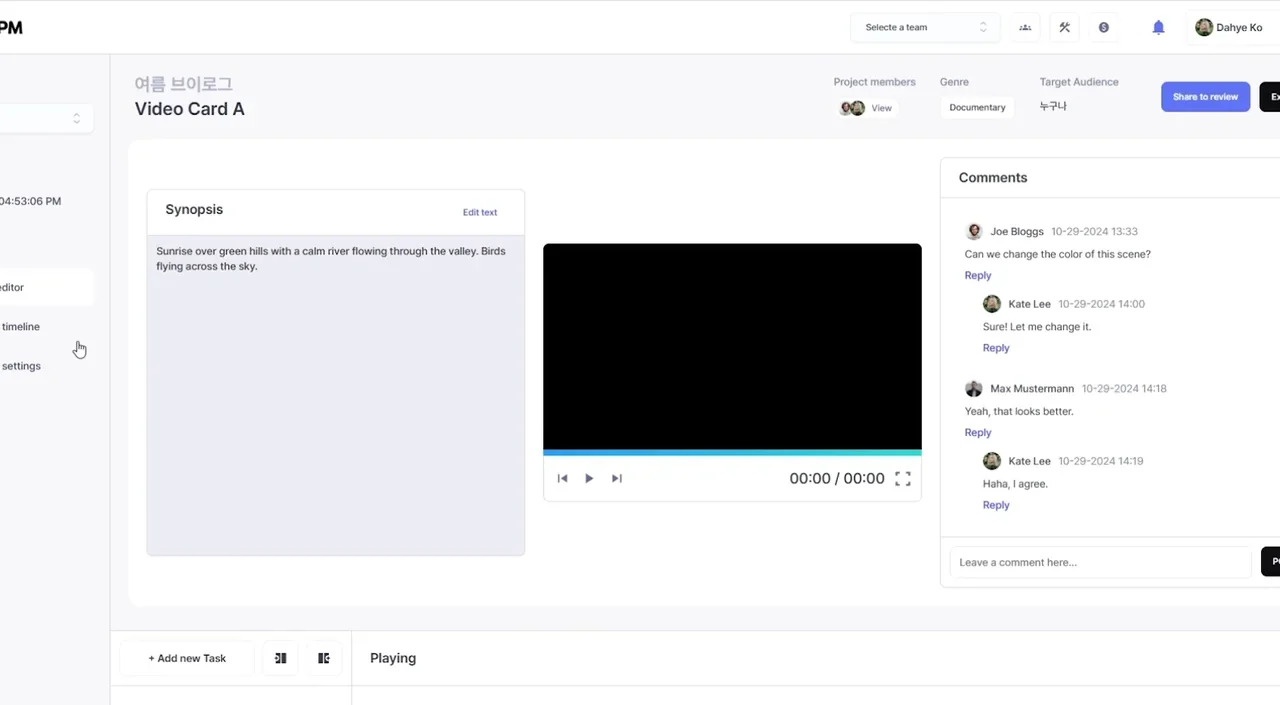
OTACU is a multimodal video understanding technology that analyzes scenes, actions and sound in video together.
We are developing technology that structures when events occur and how audiovisual information relates, and finds mismatches in generated video for review and correction.
-
Relationships Between Audiovisual Events [ 01 ]
We handle the relationship between objects and actions in video and voice, music and sound effects. The problem is interpreting which events the on-screen motion and the sounds you hear correspond to.
-
When Events Happen [ 02 ]
We represent changes in action and the start and end of events as time segments. We aim for a structure that evaluates event descriptions and temporal boundaries separately and can be used to locate points for review.
-
Mismatches in Generated Video [ 03 ]
We address deformation of people and objects, physically inconsistent motion, and lip-sync and sound-source mismatches. The direction is to link error types to where they occur for subsequent review and partial correction.


